



A Founder’s Story – The Choromanski Legacy

Barb Hemberger • November 20, 2023

A Visionary’s Legacy: The Story Behind Our Name


In our last blog, “A Month to Remember St. Therese of Lisieux,” we shared who St. Therese of Lisieux was, and how her acts and demeanor inspired the Saint Therese organization name and our mission, “to do ordinary things with extraordinary love.”


What we didn’t delve into was the genesis of this decision. Who knew about St. Therese and singled her out? For that we are eternally grateful to one of our co-founders, Jerry Choromanski.


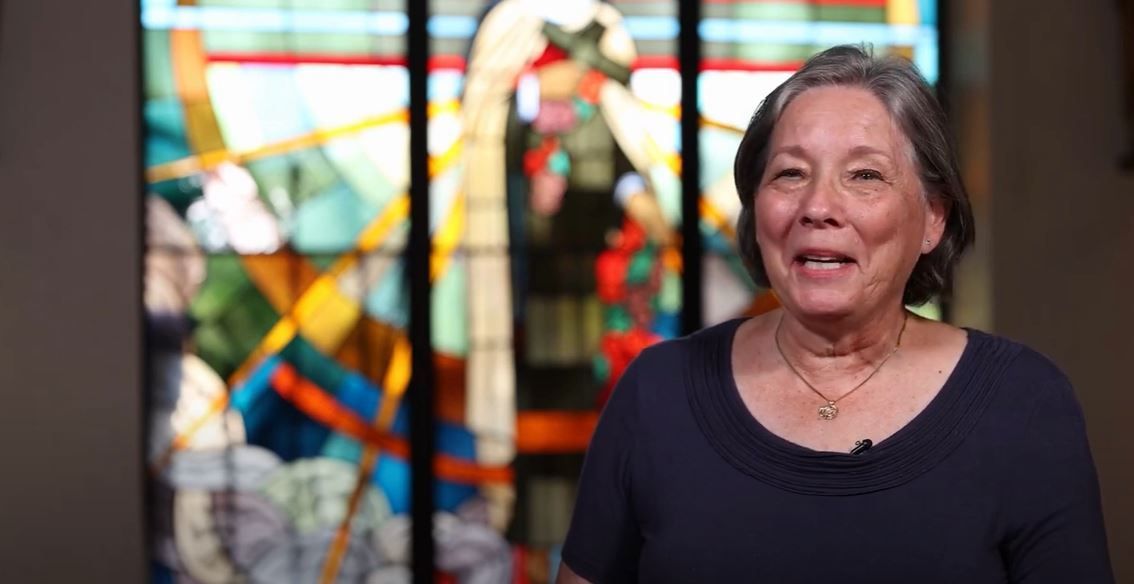
To help tell the story, we talked to Lynn Choromanski, the second oldest of Jerry and Ursula’s seven daughters, and a Saint Therese board member.


Lynn described how Jerry grew up in northeast Minneapolis, the son of hard-working Polish immigrants, Josephine and Joseph Choromanski. In Lynn’s own words (click on links):

Lynn Choromanski Clip #1

A black-and-white formal wedding portrait showing a seated groom and a standing bride holding a large bouquet.

In particular, Lynn talked about her Grandmother, Jerry’s mom, who may have been the hardest worker of them all. At times in her life, she owned a restaurant, two homes, sold bootlegged liquor and worked as a seamstress.


It was during this time – the 1920’s – that St. Therese of Lisieux became a saint, and she was well known in the Catholic community.


Lynn Choromanski Clip #2


Once Jerry and his wife, Ursula, began having a family, St. Therese became their patron saint. All seven daughters took “Therese” as their confirmation name and Lynn said her presence was a constant in their lives.


Lynn Choromanski Clip #3

The dream of building a senior living community in New Hope came about after Jerry’s mom had a major stroke and the family moved her into the closest Catholic nursing home they could find, in Winsted, Minnesota, about an hour west of the Choromanski home in Crystal.


The lack of a Catholic facility closer to the metro provided the catalyst for Jerry to begin working with others to plan and build one in the metro. He was already a well-known and respected bank executive with Crystal State Bank and soon found and purchased farmland near Bass Lake Road and Winnetka Avenue North, very close to his neighborhood and business.

A bishop in vestments performs a ceremonial groundbreaking with a shovel, surrounded by religious and lay observers.

The name chosen was, of course, Saint Therese.


Building and opening the community was a family affair, up to and including when it opened in 1968.


Lynn Choromanski Clip #4


Lynn Choromanski Clip #5

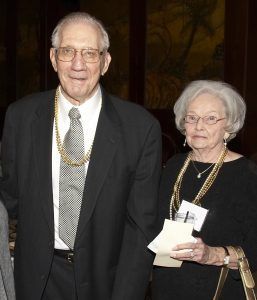
A person in a dark suit and tie with a gold chain stands next to a person in a black top wearing multiple gold necklaces.

While Jerry was the driving force, Ursula was right by his side, especially with her service to the Auxiliary and the Gift Shop. Although, as Lynn said, having seven kids was job enough. Still, she was there to help in any way. she could.


Lynn Choromanski Clip #6

Over the years, all the Choromanski daughters contributed in ways to Saint Therese, be it serving on the Board of Directors, contributing money, working at the gift shop or volunteering in other ways. And now that extends to the grandkids.


In their later years, both Jerry and Ursula lived in the New Hope community. And, and both passed away in 2015, within a week of each other.


To be sure, the Choromanskis didn’t do this alone. The other cofounders – Father Gordon Mycue, Elizabeth Hidding and Sister Marcelline Jung, OSB – were very involved and created the vision. But, it isn’t too much of a stretch to say that without the Choromanskis, we wouldn’t be who we are today.

A vintage portrait of seven people posed in front of a mottled grey backdrop, wearing coordinated late-1960s style clothing.

And Lynn doesn’t want their connection to be forgotten.


“I think as an organization, we were an innovator,” said Lynn. “Our reputation is what’s so special. People know us, they respect the brand. The legacy is what’s so special and how it came from small roots to where we are today. We’ve grown and blossomed and spread branches to different part of the city and now the country, with the Michigan community.


Lynn Choromanski Clip #7

Seven people stand in a row behind a seated man in an indoor setting with wood-paneled walls.

Stay Connected


Search All Posts


About

At Saint Therese, our heartfelt purpose since 1968 has been a people first approach to living well by providing senior care and services where every life we touch feels welcomed, respected, and heard. We achieve this by doing ordinary things with extraordinary love every single day. Contact us to learn more. 

Modern multi-story apartment building with a dark gray exterior, balconies, and a paved entrance area.
By Barb Hemberger • September 16, 2026
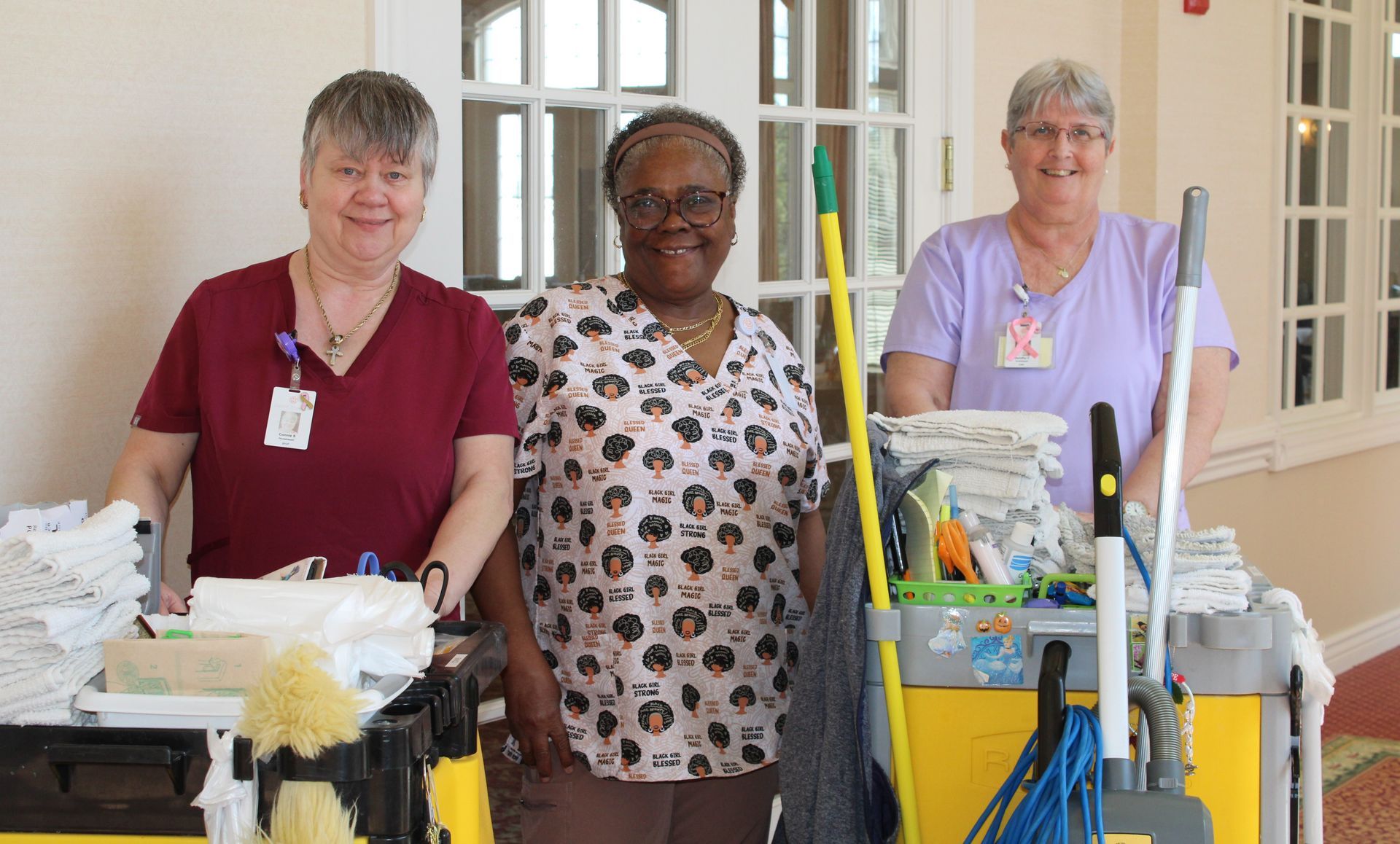
The work of environmental services professionals is often most noticeable when it’s not done. Yet these dedicated staff members contribute to nearly every part of daily life in a senior living community. They help protect residents’ health and safety, keep shared spaces clean and welcoming, and handle countless details that allow a community to operate smoothly. Just as importantly, they become familiar, trusted faces for the residents they serve. During National Environmental Services Week , Saint Therese is recognizing these essential professionals and the difference they make every day. At St. Mary of the Woods , that includes three longtime housekeepers with a particularly special connection. Connie Smith, Felicia Smith and Dorothy Clark have each worked at the community for 20 years. Over the years, they have become much more than colleagues. “We stick together,” they said. “We’re the Three Musketeers.” A place to build a career Felicia remembers driving past St. Mary of the Woods before she began working there. “This is where I’m going to retire from,” she told herself. Decades later, her prediction appears to have been a good one. The three women came to St. Mary of the Woods from very different places. Dorothy is from Avon, Felicia is originally from Alabama, and Connie came to the United States from Germany when she was 19. Connie and Felicia are sisters-in-law, while Connie and Dorothy discovered they are only 10 days apart in age. Their children are also close in age. Through years of working side by side, the three have developed a friendship grounded in mutual respect, shared experiences and a genuine love for the residents they serve. “We’re like their family,” they said. “We’re always here.” They also credit their supervisor, Dave Csalos, with creating a supportive environment for the team. “He’s so good,” they said. “We couldn’t ask for anything more.” Work that touches daily life For housekeepers, environmental services work is both practical and deeply personal. They regularly spend time in residents’ homes, where they notice the small things, share conversations and provide the reassuring consistency that helps a community feel like home. For employees such as Connie, Felicia and Dorothy, those relationships have grown over the years. Their longevity also brings something invaluable to St. Mary of the Woods: experience. They understand the community, know its rhythms and take pride in helping everything run as it should. This Environmental Services Week, Saint Therese thanks Connie, Felicia and Dorothy, along with environmental services professionals throughout the organization . Their dependable work, attention to detail and care for residents make a difference every day. ____ Shown in the photo above are (left to right): Connie Smith, Felicia Smith and Dorothy Clark.
By Barb Hemberger • September 1, 2026
How an ambitious idea, a year of persistence and a shared faith created something remarkable at Saint Therese of Corcoran

By Barb Hemberger • June 23, 2026
It is important to understand the assisted living vs memory care debate. Assisted living supports older adults who need help with daily activities , while memory care provides specialized care for individuals living with Alzheimer's disease, dementia, or other cognitive conditions. Memory care includes additional safety measures, structured routines, and staff training designed specifically for the unique challenges associated with memory loss. For many families, understanding the difference becomes an important part of making an informed decision. While both assisted living and memory care provide support in a community setting, they serve different needs and are designed for different stages of aging. If you are trying to determine which option may be the best fit, it is helpful to understand these better. You must know how each level of care works, who it is designed for, and what signs may indicate it is time to consider additional support. What is Assisted Living and Memory Care? Assisted living and memory care are both senior living options that provide support with daily life, but they differ in the type and intensity of care they offer. Assisted living is designed for older adults who remain largely independent but need help with certain activities. These can include medication management, dressing, bathing, mobility, or household tasks. Memory care is specifically designed for individuals experiencing cognitive decline due to Alzheimer's disease, dementia, or other memory-related conditions. The primary difference is that memory care includes specialized programs and secure environments. The care approaches are tailored to the unique needs of individuals living with memory loss. Assisted Living vs Memory Care: A Side-by-Side Comparison To understand the differences better, let us look at a side-by-side comparison of the two levels of care.