

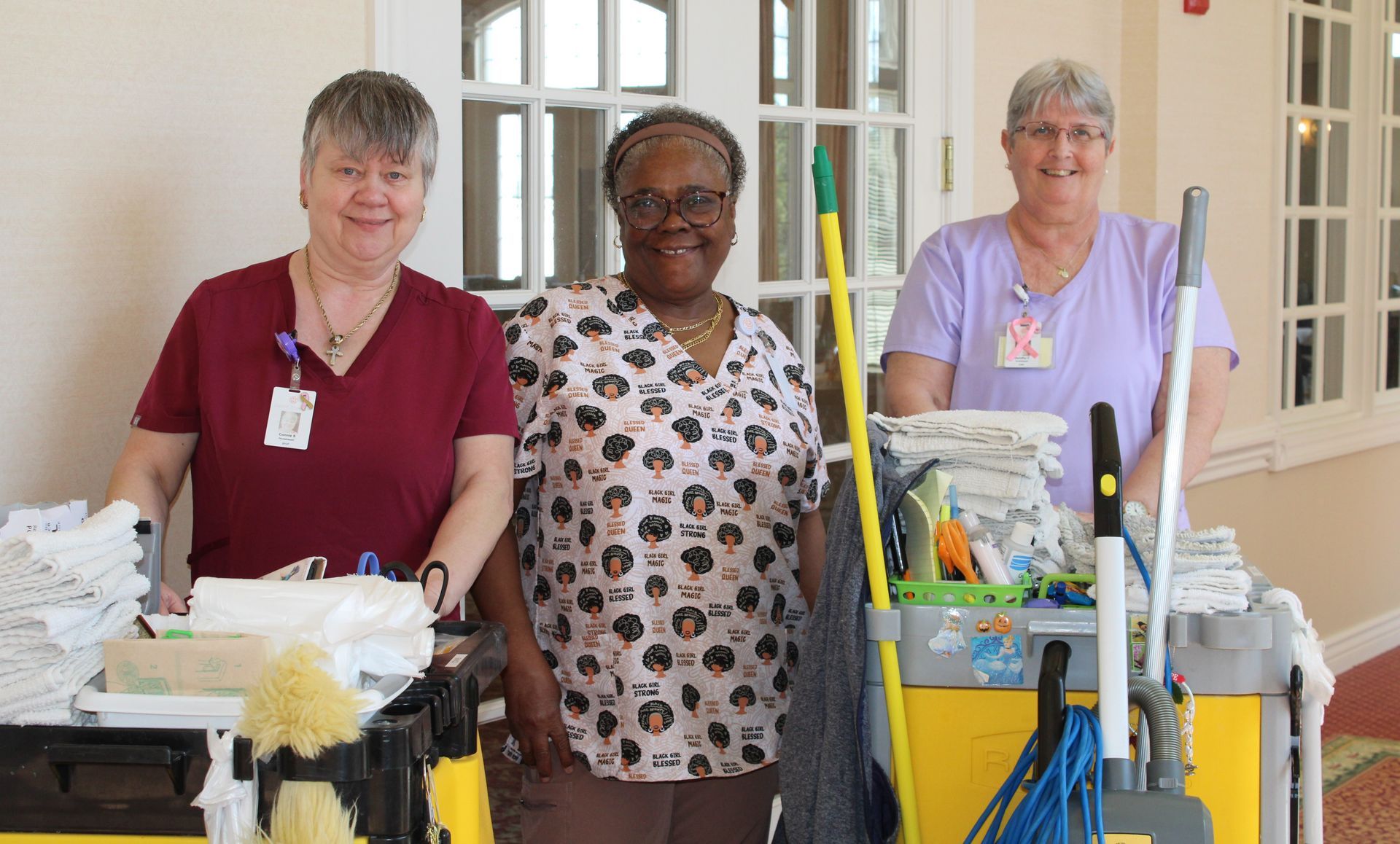
The work of environmental services professionals is often most noticeable when it’s not done. Yet these dedicated staff members contribute to nearly every part of daily life in a senior living community. They help protect residents’ health and safety, keep shared spaces clean and welcoming, and handle countless details that allow a community to operate smoothly. Just as importantly, they become familiar, trusted faces for the residents they serve. During National Environmental Services Week , Saint Therese is recognizing these essential professionals and the difference they make every day. At St. Mary of the Woods , that includes three longtime housekeepers with a particularly special connection. Connie Smith, Felicia Smith and Dorothy Clark have each worked at the community for 20 years. Over the years, they have become much more than colleagues. “We stick together,” they said. “We’re the Three Musketeers.” A place to build a career Felicia remembers driving past St. Mary of the Woods before she began working there. “This is where I’m going to retire from,” she told herself. Decades later, her prediction appears to have been a good one. The three women came to St. Mary of the Woods from very different places. Dorothy is from Avon, Felicia is originally from Alabama, and Connie came to the United States from Germany when she was 19. Connie and Felicia are sisters-in-law, while Connie and Dorothy discovered they are only 10 days apart in age. Their children are also close in age. Through years of working side by side, the three have developed a friendship grounded in mutual respect, shared experiences and a genuine love for the residents they serve. “We’re like their family,” they said. “We’re always here.” They also credit their supervisor, Dave Csalos, with creating a supportive environment for the team. “He’s so good,” they said. “We couldn’t ask for anything more.” Work that touches daily life For housekeepers, environmental services work is both practical and deeply personal. They regularly spend time in residents’ homes, where they notice the small things, share conversations and provide the reassuring consistency that helps a community feel like home. For employees such as Connie, Felicia and Dorothy, those relationships have grown over the years. Their longevity also brings something invaluable to St. Mary of the Woods: experience. They understand the community, know its rhythms and take pride in helping everything run as it should. This Environmental Services Week, Saint Therese thanks Connie, Felicia and Dorothy, along with environmental services professionals throughout the organization . Their dependable work, attention to detail and care for residents make a difference every day. ____ Shown in the photo above are (left to right): Connie Smith, Felicia Smith and Dorothy Clark.
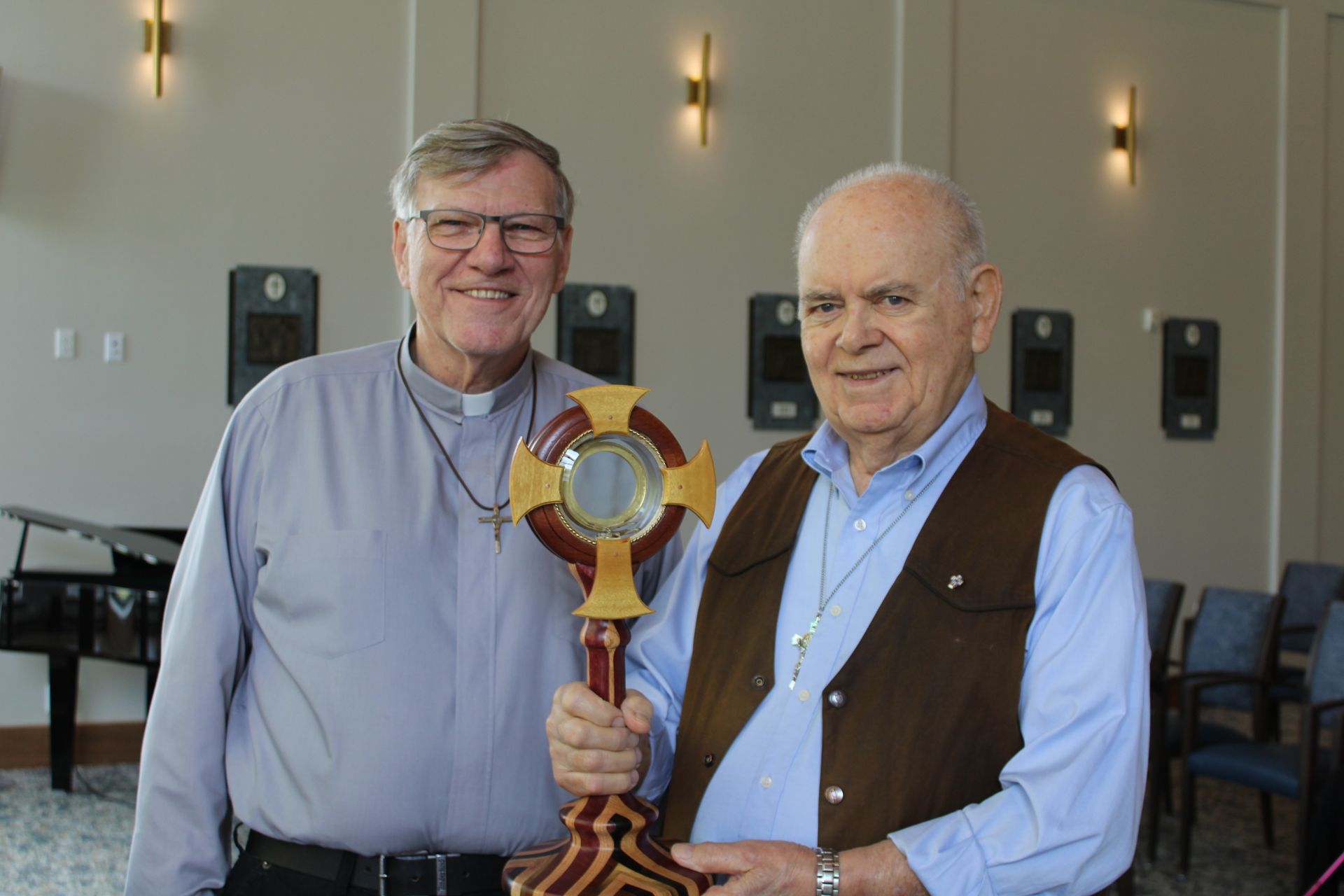
How an ambitious idea, a year of persistence and a shared faith created something remarkable at Saint Therese of Corcoran

It is important to understand the assisted living vs memory care debate. Assisted living supports older adults who need help with daily activities , while memory care provides specialized care for individuals living with Alzheimer's disease, dementia, or other cognitive conditions. Memory care includes additional safety measures, structured routines, and staff training designed specifically for the unique challenges associated with memory loss. For many families, understanding the difference becomes an important part of making an informed decision. While both assisted living and memory care provide support in a community setting, they serve different needs and are designed for different stages of aging. If you are trying to determine which option may be the best fit, it is helpful to understand these better. You must know how each level of care works, who it is designed for, and what signs may indicate it is time to consider additional support. What is Assisted Living and Memory Care? Assisted living and memory care are both senior living options that provide support with daily life, but they differ in the type and intensity of care they offer. Assisted living is designed for older adults who remain largely independent but need help with certain activities. These can include medication management, dressing, bathing, mobility, or household tasks. Memory care is specifically designed for individuals experiencing cognitive decline due to Alzheimer's disease, dementia, or other memory-related conditions. The primary difference is that memory care includes specialized programs and secure environments. The care approaches are tailored to the unique needs of individuals living with memory loss. Assisted Living vs Memory Care: A Side-by-Side Comparison To understand the differences better, let us look at a side-by-side comparison of the two levels of care.